Ecofeminism, Subsistence Living & Nature Awareness

July 27, 2009

Sustained Commitment: the Gardener’s Challenge

Filed under: Homestead garden, Paula Mariedaughter, Subsistence Living — Paula Mariedaughter @ 7:49 am
wreath

Clematis Among the Eastern White Pine Cones in Paula's Wreath

Spring finds every gardener full of enthusiasm for the turning of the seasons. We want to turn the soil of our gardens and work magic with Mother Nature. We are ready to turn our backs on winter and our faces toward the sun. We gather our seeds, tools and bring our grand hopes to our plantings. The new seedlings and spurts of growth spur us on to get up early and work long days in our grubby garden clothes. As the days get hotter and the insects arrive to torment us and our vegetative friends, we can falter in our efforts to weed, water and pick hornworms. Tim Stark put it this way, ” After twelve years of growing vegetables, I have learned to accept that every [growing] season presents a unique set of conditions that invariably prove to be less than optimal.” Stark wrote this in Heirloom: Notes from an Accidental Tomato Farmer. Wind, rain, no rain, bugs, heat, cold, and/or animal attacks can overwhelm the most enthusiastic gardener.

I try to look to my successes and minimize a focus on the non-successes. When I started quilting in 1994, my mentor Lila Rostenberg interrupted me when I tried to point out the mistakes in my current project. Lila assured me that there was no need to point out my mistakes. I took Lila’s advice seriously and always pass it on to my quilting students. I also appy it to my garden projects. When I am in my garden I employ the same strategy–it is a strategy you know! I learn what I can about the plants that do not thrive and I keep trying until it becomes clear that my garden is not meant to grow, for example, lovely delphiniums because they cannot tolerate our hot days and hot nights. I look for similar alternative plants. In the case of delphiniums, I found larkspur which do thrive here and even self-seed themselves for next year.

Today I’ve prepared a garden tour of some of our early-season successes starting in our main garden. At the center “grows” a driftwood figure we call our Dancing Goddess! The original was a piece of driftwood we discovered down the mountain along the river after a storm. It took a decade for the first Dancing Goddess to melt back into the earth. The current goddess is formed from part of the root system from an Osage Orange (also called Bodark or Hedge) tree we had to remove twenty years ago. Her outstretched arm holds this pinecone wreath I fashioned from the cones from the Eastern White Pine. I am fascinated by the curvy shapes of these cones. Not pictured, but below the Dancing Goddess, lounge bright red bee balm flowers to entice hummingbirds.

Striper

Striper Hunts Bugs Under the Tomatoes

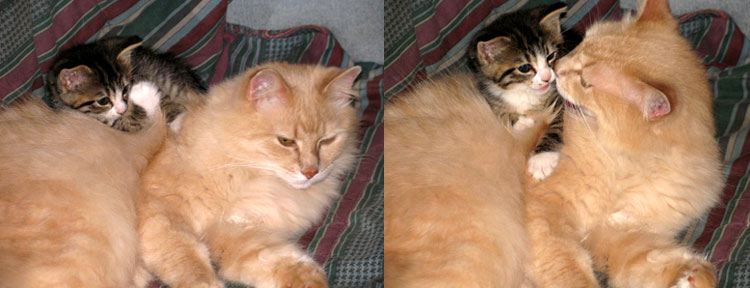
Striper was a howling kitten when Jeanne found him abandoned down by the river. Named for his distinctive bold orange stripes he is posed below the thriving tomatoes. Each morning and evening, Striper also looks for bugs while I scan the tomato stems carefully for the camouflaged hornworms disguised as just another tomato stem. Below Stiper are the basil plants and to the right are sage plants spilling into the path.

Cleome

Cleome or Spider Flowers Dot the Garden with Color by Mid-Summer

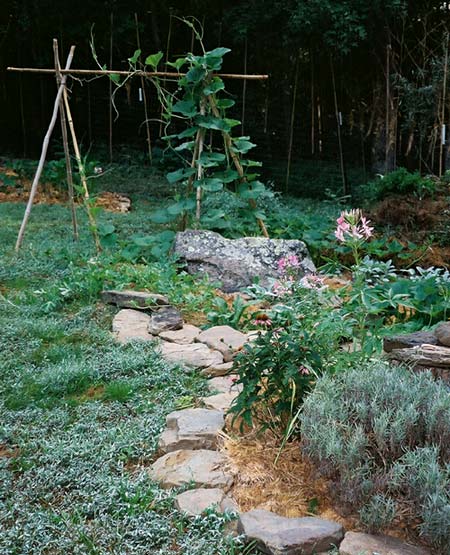
When we expanded our garden this spring I moved these purple coneflowers, the silver lamb’s ear and the cleome to our former visually neglected compost area. We needed the bed space for edibles. I landscaped with large rocks from the river to provide steps in this steep area. In the background you can see that Jeanne has created a huge mound of fresh materials to make fresh compost. The gold flowers are the first blooms of the rambling pumpkin patch. Some of the ten foot vines reached to the fence and the deer pulled on the vines through the fence to consume the tender growth.

Compost

Jeanne's Carefully Mounded Compost Pile in the Background with Huge Gourd leaves on the Far Left of the Picture

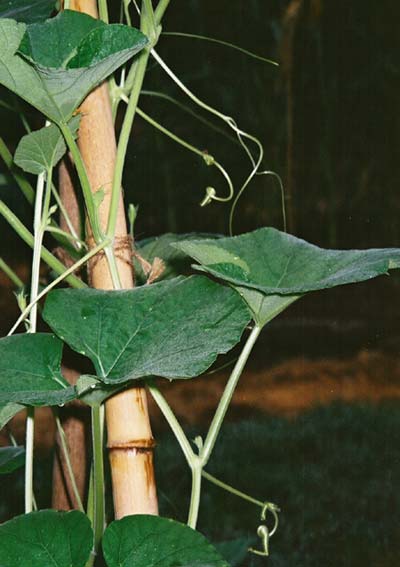
Our birdhouse gourd vines exhibited exuberant growth up the bamboo trellis I’ve provided. They seem to grow ten inches overnight and the long curling tendrils reach out for support and comfort (or so it seems,)when I walk by. Yesterday I found the first of the delicate white flowers that will transform themselves into foot long gourds in less thatn two months. These miracles of creation draw me back to the garden day after day. I depend on them to renew me. And I depend on these miracles to renew my commitment to hauling water and attending to the other needs of a successful garden–most of which I enjoy.

Gourds large and small were used by native peoples for serving dishes, mixing bowls, plates, dippers, storage and even for heating liquids. Once dried and cured gourds are strong and useful tools. To heat liquids in a gourd, one does not place the gourd over a hot fire. Instead, one heats several small clean rocks on the edge of a fire. Then using wood tongs the heated rocks are carefully dropped into the liquid transferring the heat from the rocks to the liquid.

Birdhouse Gourds in the Background and Lavender in the Foreground

Birdhouse Gourds in the Background and Lavender in the Foreground

Jeanne and I choose to add flowers and herbs to the mix in our vegetable garden. From comfrey and astragalus to foxgloves, coneflowers and morning glories we depend on these to bring pollinaters and to offer spots of color and texture to the garden canvas. This is our most ambitious garden; we are growing strawberries, corn, basil, garlic, cucumbers, yellow squash, carrots, pumpkins, watermelon, three varieties of tomatoes, gourds, several types of beans and a variety of greens. Last fall we planted three apple trees and cleared around a “found” mulberry tree.

Morning Glories

Morning Glories Beginning to Climb the Obelisk

Our yellow crookneck squash are buzzing with bees and beginning to produce the tender squash as the flowers fade to fruit, or in this case vegetables. The leaves are over a foot across and erect like an umbrella. We are seeing unwelcome signs of powdery mildew on the leaves of the squash and the cucumbers. Both of these plants have prickly hairs that irritate the forearms as we pick underneath the leaves searching for young fruit before they become oversized. Some people have a severe reaction to this irritant. Beware.

Squash Plants

Lush Growth on the Squash Plants with many Cleome in the Background

Our end-of-July garden tour of Cedar Hill closes with a closeup picture of the tendrils that tether these luxuriant birdhouse gourd vines to any nearby object. Each tendril has its own agenda as it stretches and twines toward a stationary object. The bamboo is harvested from our own homegrown stand. Our bamboo trellis lifts the vines off the ground and toward the sunlight allowing air to circulate among the leaves. Circulating air minimizes the chance of invasions of unfriendly mildew spores here in the garden as well as indoors if not using air conditioning.

If you look closely you will see that I have used jute to train the vines up the slippery bamboo poles. Gourds too have prickly leaves, but assisting the vines by tying them carefully to the bamboo is part of my ongoing relationship to the summer garden. Cool moist mornings are my favorite time of a day in the garden. The early morning promise is rather like the hopefulness of spring. Sustained commitment to nurturing and harvesting rewards you with snacks of perfect strawberries and tastes of green beans so tender when plucked off the bush that you do not dream of cooking them. Munch them whole while they last. It will be a long wait until next year’s crop.

Gourds

Tethering Tendrils of the Birdhouse Gourds

July 22, 2009

Rambunctious Canine Meets Rambling Pumpkin

Filed under: Homestead garden, Paula Mariedaughter, Subsistence Living — Paula Mariedaughter @ 9:30 am
Early July Pumpkin Patch

Early July in the Pumpkin Patch

I fell for a warty, peach-colored pumpkin at the Fayetteville Farmer’s Market last fall. The knobby growths and pale color attracted my imagination as the multitude of pumpkins jostled for attention on the long flatbed trailer. The pale color and the unusual texture pleased me in the same manner that I find the nubs seen in raw silk fabric add a pleasing texture to a smooth silk fabric. I circled the display searching for the perfect pumpkin to bring home to Cedar Hill. When I asked the farmer about the name of this variety, he pulled out the catalogue and pointed to Galeuse d’Eysines adding that they are delicious pumpkins encouraging me to steam it and to eat it.

I discovered that my adopted pumpkin was from Eysines, France introduced in 1883. This unique pumpkin, Cucurbita maxima, was also called Warted Sugar Marrow. I was sure my pumpkin was no hybrid with a pedigree like this! I had fantasies of growing my own next spring.

Sugar Marrow Pumpkin

Sugar Marrow Pumpkin from Eysines, France introduced in 1883

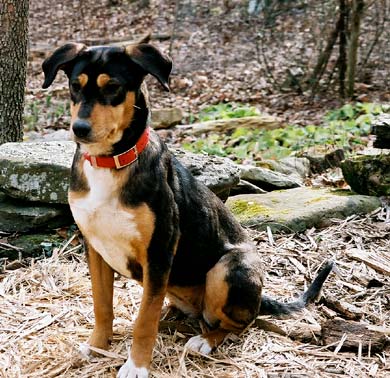
I displayed the Galeuse d’Eysines in several spots in the house that fall and winter appraising the personality and charm of this new acquaintance. By early spring, I had moved it to a spot outside near the front bench. As the pumpkin began to sink in on itself, I discovered that Shyla, our youngest adopted mutt, had enjoyed the texture in her own way. Shyla had shredded skin and the inner membranes containing the seeds. I found seeds and membranes scattered near the rock wall that marks our first garden bed. I vaguely hoped some might sprout, but had no expectations.

Today we have three rambling pumpkin vines climbing over and around our former compost area. Circumstantial evidence led me to believe that those wandering pumpkin seeds did sprout! I noticed the small pumpkin plants nestled near the rock wall before the deer did. I quickly transplanted them to a sunny spot below the main garden where they will be able to spread their tendrils far and wide before fall ends their adventure. I do not want to “count my pumpkins before they hatch”, but I am extremely hopeful that this will be the beginning of a beautiful relationship. Some of the immature pumpkins are the size of golfballs–smooth with no warts yet. When I wrote this last week I was convinced that I had the wonderful warty pumpkin growing.

Today I believe that I jumped to conclusions! The pumpkins a bigger, still white, and have no warts. Among my scrapbook items for last fall I found a label for a “White Carving Pumpkin” from Bottomleys Evergreens in North Carolina and a product number to go with that pumpkin. I searched their online catalogue to locate the botanical name of the thirty pumpkins glowing in our garden but found no white pumpkins. I have emailed them about my dilemma and will report any results. Jeanne and I have resolved to buy seed for the Warty Sugar Marrow pumpkin for next year!
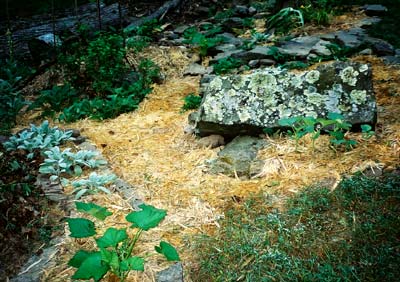
Saving seeds from hybrid plants is risky because the seeds are often not true to form. Seeds from non-hybrid plants, or open-pollinated seeds (sometimes called heirloom seeds), are reliable in producing plants and fruit like the parent. We have transformed our garden this year with our sweat and hand tools to make room for more edible plants. All our new seeds will be open-pollinated so we can save our own seeds for the future!

Our previous raised beds did not provide room for extreme ramblers like pumpkins, gourds and watermelons–all of which we are trying this year. Each of these varieties displays an affection for hot days and nights. I am energized by the “lust for life” of the cucurbit family. The Miniature White Cucumbers we planted are so prolific that I need to eat one every time I open the refrigerator. Picked at three inches long and chilled in the solar-powered refrigerator they are a perfect summer treat. With a sweet cucumber flavor and skin as tender as an apple, this cucumber is best eaten raw and I do.

Shlya

Shyla, the Rambunctious Pumpkin Shredder

A great source for open pollinated seeds is Seed Saver’s Exchange, 3094 North Winn Road, Decorah, Iowa 52101, 563-382-5990, www.seedsavers.org. All the seeds I have mentioned here were purchased from Seed Savers including:
Birdhouse gourd: Lagenaria siceraria
Watermelon: Crimson Sweet, Citrullus Lantatus
Miniature White Cucumbers, Cucumis sativus

I was challenged to understand which of these might cross-pollinate and produce an undesired, inedible hybrid. Seed Savers recommended The Compleat Squash: A Passionate Grower’s Guide to Pumpkins, Squashes and Gourds by Amy Goldman (2004). The author indicates that squashes will not crossbred with melons and cucumbers. However, squashes in the same species do cross with one another. We have kept it simple this year by growing only one variety of squash.

The squash, watermelon and cucumbers were purchased seed. Our Warted Sugar Marrow pumpkin was planted by a rambunctious canine and nurtured by Mother Nature until Paula discovered it sprouting in deer territory. It has been a team effort with Jeanne carrying water to the pumpkin patch occasionally. All of these are rampant growers with big leaves and curling tendrils reaching for support. Some of the pumpkin vines are twelve feet long and still growing! I have developed an intimate relationship with each plant. I find myself infected by their “lust for life” and energized by their exuberance. Thank you, Shyla, for your part in this story!

July 14, 2009

Subsistence and Resistance

In a recent column in Orion (May-June 2009) Derrick Jensen criticized the “simplicity” movement and what he says is one of its core questions, “If our world is really looking down the barrel of environmental catastrophe, how do I live my life right now?” Jensen’s criticisms of simplicity living are multi-faceted, but the heart of his argument, as I understand it, is that this culture is “killing the planet” and must be stopped, just as a psychopath rampaging through your house and killing your family members would need to be stopped. In light of the severity of the problem (a culture that is killing the planet), lifestyle choices are insignificant and resistance is imperative.

Reform or Revolution?

Yellow squash plant

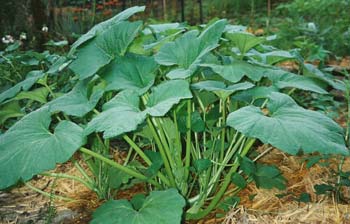
Lush yellow squash plant

While I agree wholeheartedly that we need to resist and stop the globalized industrial capitalist patriarchy that is killing the planet, those of us living in the “developed” world desperately need to create vastly changed human cultures that live in a way that benefits nature and benefits humans. In many “developing” countries ancient and sustainable subsistence cultures still remain more or less intact outside the cities and land areas taken over by development. But in the developed world the takeover by globalized patriarchy is so complete that almost everyone is dependent on the captor (globalized patriarchy) for their basic means of living – food, shelter, water, clothing, fuel. In subsistence societies where the earth is healthy (as it was prior to patriarchal civilization), basic needs of life can be met by every person either in direct interaction with the earth or with members of their own local community.

The value of individual lifestyle changes depends largely on whether the purpose and effect of the changes are reform or revolutionary change. For example, buying efficient, “green” consumer goods is an act aimed at reform. While the “green” products may be an improvement over older, “legacy” goods in terms of environmental impact, consuming the goods supports continued large scale industry and business almost as usual. Production of the products is far more likely to harm the earth than help her. In contrast, the development of subsistence cultures that benefit the earth and replace globalized patriarchy is revolutionary change. People living in lands now dominated by “developed” nations can take steps toward developing matriarchal, subsistence cultures. When they do, their individual lifestyle changes contribute to revolution. Just as acts of resistance to globalized patriarchy can attempt to reform society (leaving massive industrialization and male dominance in place) or effect radical change, daily living practices can intend and produce reform or revolution (or perpetuate the status quo).

Post-Patriarchal Living

I don’t think that we can “stop this culture from killing the planet” without both resistance and creation of new/old subsistence cultures. We need to both stop the patriarchal earth-destroying culture and create new earth-loving cultures. The devastated earth needs the restoration and caretaking that humans in matriarchal, subsistence societies can provide her. Freeing the earth of possession by patriarchy and seeing nature begin to recover is a big motivation, but people also need to be able to envision and experience post-industrial, post-capitalist, and post-patriarchal ways of living. For most people in “developed” nations an end to globalized industrial capitalist partriarchy would seem like suicide – an end to the basic necessities of life (as well as the treasured frills). By starting to create subsistence cultures now, more people in the developed world can believe that there is a path to take out of globalized patriarchy and industrialization that allows life, including their own, to continue.

We also need to influence the form of the subsistence societies that will follow globalized patriarchy. Globalized patriarchy is heading toward collapse because it is taking from nature at a rate that exceeds nature’s ability to replenish herself. Subsistence living will follow collapse, but past and present subsistence societies have frequently been patriarchal and harmful to women. As a woman I greatly fear male violence and other attempts to control women during and following societal collapse. Beginning to consciously transition to subsistence now can help create cultures that are matriarchal – egalitarian, based in strong bonds between women and respect for all of life. The end of globalized patriarchy can be a door opening into a far better world, but not if any form of patriarchy continues.

Building Subsistence Cultures

At the heart of any human culture are the ways people relate to the earth to provide for basic needs – shelter, water, food, heating. As members of the “developed” nations turn to subsistence living, new subsistence cultures will develop from humans meeting their basic needs through direct relationship with local nature and local human community. These are “lifestyle changes” that create new subsistence cultures. Subsistence gardening is one activity that begins to build subsistence cultures. As Richard Heinberg has pointed out, without fossil fuels and machinery many more people will need to become involved in growing food. Using techniques such as Ecology Action’s Grow Biointensive (Jeavons, 2002, How To Grow More Vegetables, 7th Edition) people can work with nature to grow more food and more nutritious food on less land. (One person can be fed with the crops grown on as little as 4000 square feet using Grow Biointensive methods while “modern” agriculture requires 15,000-30,000 square feet for the average U.S. diet and much more for heavy meat eaters.) This method of horticulture grows topsoil as well as crops, benefiting nature. With large numbers of people gardening small areas of land, the land can be well cared for and areas of former farmland can be returned to nature. People able to grow their own food (including staples such as grain and potatoes) lose a big chunk of their dependence on globalized patriarchy and become freer to resist.

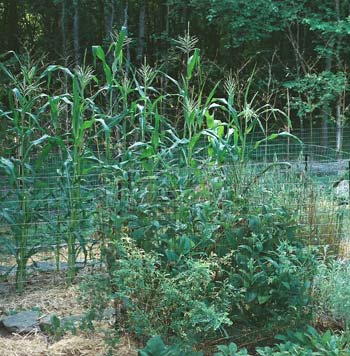
Sweet corn, oats, comfrey, astragalus

Sweet corn, our first attempt at oats, comfrey, astragalus, sage

Gardening can be more or less an act of building subsistence culture. At Cedar Hill our goal is to help build a subsistence, matriarchal culture, not just to grow a few tomatoes. We are a long way from an ideal of growing most of our diet and using no outside inputs, but we are moving in that direction. We’re growing at least some dietary staples like dried beans, potatoes and, this year, a few oats. We use mostly heirloom and other open pollinated seeds and are saving the seeds. We use hand tools exclusively so the energy used to grow and maintain the garden comes from the sun and human power (though the hand tools are well crafted 20 year old industrial-made tools). We’ve never used chemical fertilizers or pesticides, but we have brought in alfalfa meal, greensand, manure, worm castings and compost produced off site over the years. Now we are getting very serious about the compost pile(s) and planning what crops to grow so we’ll have enough carbon and nitrogen in the residues to create enough compost to fertilize the entire garden. We collect water off our roof into big stock tanks (again industrial-made) and water by hand, so we are trying out plantings that can get by without much irrigation in our very hot summers. We are still trucking in mulch, wonderful ash shavings from a local handle factory, but we did use oak leaves for one potato bed this year with successful results.

Lina Sisco Bird Egg heirloom beans, Tomatoes

Lina Sisco Bird Egg heirloom beans, Tomatoes

The men who sold us industrial society were first rate snake oil salesmen. Regaining our lost connection to nature (and to human community) should make up for many supposed “losses” that come to people in the “developed” world with an end to massive modern industry. Subsistence gardeners begin developing a real relationship with the earth – the smell of her soil, the wildly colorful food crops, the native plants returning to the lands freed from agriculture, the insects chomping their way around the garden, the precious predator insects, bug-snarfing toads, the feel of the rains and winds on their own skin. With connection to nature can also come the directly experienced spirituality that so many people in globalized patriarchy have been futilely searching for. Replace patriarchy with matriarchy and “heaven” comes down to earth!

Stop Globalized Patriarchy Now!

Subsistence and resistance. Resistance and subsistence. We need both. But, practitioners of each need to keep their eye on the ball. Globalized patriarchy is destroying the earth. We don’t need minor adjustments and reformist change. The small cuts in fossil fuel emissions by 2020 promised by the current version of the ACES bill in the U.S. Congress does next to nothing to reverse global warming, a frightening example of the failure of the reformist approach. We likewise can’t afford to get so busy out in the garden that we forget to resist. Subsistence is in some ways easier than resistance as one could co-exist without active opposition to globalized patriarchy (at least until the waters rise, the bug-eating toads go extinct, or cancer strikes home).

On the other hand, a singleminded focus on resistance prioritizes the public (traditionally male) sphere over the “private” (traditionally female) sphere, as Maria Mies and Veronika Bennholdt-Thomsen (The Subsistence Perspective, 1999) and Sharon Astyk (Depletion and Abundance, 2008) have pointed out. Politics with a capital “P” and economics with a capital “E” characterize male-dominated, large-scale societies, while daily living and the women who typically provide are more important in small-scale subsistence societies. Revolutions in industrial societies have consistently produced only male-controlled, domination-based societies.

We have to live during and after the revolution and the living could even be the revolution if only everyone, including the power holders, walked out on patriarchy. There isn’t much sign that most people in the developed nations are leaving their modern gadgets (and the rest of globalized industrial patriarchy) behind, so we need resistance and subsistence. As Jensen argues, we need to stop this culture from killing the planet.

May 7, 2009

Foxgloves in Abundance

Filed under: Homestead garden, Paula Mariedaughter — Paula Mariedaughter @ 10:56 am
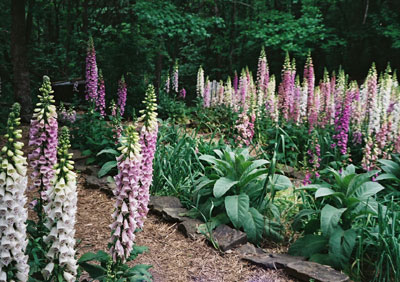
Lush foxgloves, photo by Paula

Lush foxgloves, photo by Paula

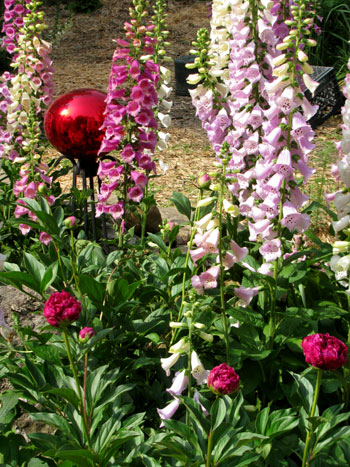
One packet of seeds purchased in the early 1990s has brought a forest of foxgloves into our lives. At the time, I was operating Everlastings Etcetera where I was growing and crafting dried flowers and herbs. I poured over seed catalogues and books looking for information and possibilities. Mark and Terry Silber’s book The Complete Book of Everlastings is still my favorite resource about drying flowers and herbs. I knew that foxgloves could not be dried, but I wanted to experience the beauty of those tall spires of bell shaped flowers. I started flats and flats of seedlings and then planted them outside as the weather permitted.

With so much to do as I grew and harvested, then crafted wreaths and bouquets that I marketed at craft fairs and the farmer’s market, I neglected my foxglove seedlings. The everlastings were my bread and butter. By August I was desperate for help with planting the overgrown foxglove plants still in the seedling trays. As a birthday request, I asked Jeanne for help in getting them moved into the ground. The foxgloves were amazingly tolerant of the crowded conditions and the delayed move to a permanent home. Most of them thrived in the eastern exposure where they are protected from the hottest of the afternoon sun.

Pathway for the bees, photo by Judy Vander Ham

Pathway for the bees, photo by Judy Vander Ham

As biennials the plants must go through one winter before they bloom. In early May, Jeanne and I were rewarded with dramatic spires of long lived flowers in shades of white, pink, lavender and magenta. Each individual flower throat was marked with dark dots leading the way for fat, buzzing bumblebees to drink their nectar.

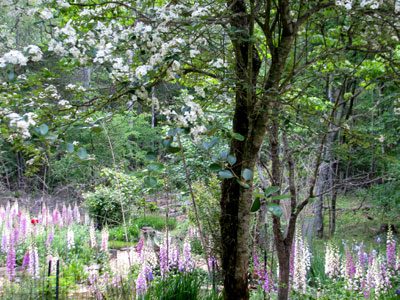
Foxgloves are prolific self-seeders if you leave the stalks in place long enough to set seeds. For the past fifteen years we have allowed the foxgloves to wander where they will. The seedlings seem to thrive at the base of the rock walls we use to retain the soil of our raised beds. Other exotic tall flowers with spires that I have tried to nurture along are delphiniums and bells of Ireland with no success–probably because of our hot summers.

Foxgloves are one of our garden successes. I have developed a gardening philosophy that embraces success. Rare specimens of individual plants do not usually intrigue me. I’d rather have lush groupings of ordinary plants with the emphasis on lush. With this philosophy, I can gather large cuttings of ordinary mint to scent the house. My eyes can feast on masses of a self-seeding dark green hosta or wild ferns like the maidenhair fern and christmas fern that thrive in our woods. I can pot up seedlings of the volunteer hostas and gather up seeds from the foxgloves to share with friends. Some gardeners regard self seeding plants as unwanted additions, and sometimes they are–for example perilla. But I consider foxgloves and others to be durable goods for the garden. Plant sellers want you to return again and again for their products. Why not grow your own whenever you can?

I use masses of ordinary plants who often chose new settings for themselves. These new combinations of textures put together by Mother Nature can delight the eye. You can see in the photo below how the huge wild mullein leaves add a silver grey texture among the foxgloves. The mullein plants volunteered in that spot. I do weed out some uninvited visitors, seeing my action as a form of editing. A tightly controlled garden does not appeal to me. Each spring can bring new adventures and discoveries especially when we welcome the abundance that self-seeding plants offer us.

Path among the blooms, photo by Paula

Path among the blooms, note the large mullein leaves, photo by Paula

May 6, 2009

Durable Goods Can Last a Lifetime!

Filed under: Economics, Homestead garden, Paula Mariedaughter — Paula Mariedaughter @ 4:52 pm

The concept of “durable goods” has been on my mind. I remember my shock when I realized that economists defined durable goods as something that lasts three years or longer. How did this come to be? As buyers we want excellent quality and a long life for our purchases whether it be a refrigerator, a wheelbarrow or a garden fork. Sellers tend to want to sell us products of poor quality needing replacement as soon as possible. In fact, economists have coined the term “interpurchase time” to describe the time between two successive purchases. The seller wants you to replace your purchase as soon as possible. Planned obsolescence can produce profits, but assaults the planet.

This desire for short term profits controls many business operations in a way not known in previous decades. As consumers and citizens we can be trapped by this perverse and shortsighted goal. Unless we actively resist we will be trapped into participation in the assault on the planet. Durable goods that are not durable are the norm. I believe we need to evaluate every purchase or acquisition we make by considering how long we can expect the item to remain useful. This is the opposite of a throwaway mentality. Authentically durable products are “green “ by definition!

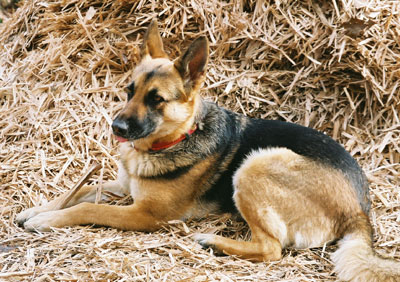
Nikki lounging on the mulch

Nikki lounging on the mulch

Last weekend my neighbor and I hauled two loads of wood shavings from a local handle factory to use as mulch for our yard and garden. We borrowed a pickup truck and drove 23 miles round trip to haul the shavings which are a byproduct of making ash handles for tools. I have been mulching with these shavings for almost twenty years. I enjoy working with the shavings because they are a long-lasting mulch and bring no weed seeds and because theysmell of freshly cut wood. The blond color of the shavings help us to see any snake visitors we might have moving in the yard. We have been able to eliminate any lawn mowing by laying down the shavings. We do use a person-powered weed wacker to keep grass down on the outskirts of the homestead. I feel like a sculptor as I spread the hardwood shavings in paths and around beds.

Our ash shavings will last between six months and one year depending on how thick we spread them, how much traffic they receive, and how wet the weather is that year. The ash shavings would be considered a nondurable goods or soft goods because they are used up in less than three years. In previous years, we have had the luxury of having a dump truck deliver a huge pile of shavings about every eight months paying $100 for the delivery. This service is no longer available. The shavings are free when we haul them, but cost us in gas and in our time and put wear and tear on any vehicle we use. Our shavings do not come packaged in plastic.

I use Jeanne’s vintage pitchfork and vintage wheelbarrow to move the shavings to every corner of our homestead. This wheelbarrow and pitchfork were first used by Jeanne twenty-five years ago to muck out stalls when she had horses. Jeanne purchased both tools in 1974 and both are valuable and durable goods to us. We have replaced the hardwood handles of the wheelbarrow twice and had the body repaired once. While waiting for repairs we were forced to buy another wheelbarrow. Searching for a sturdy well-balanced wheelbarrow made us realize once again what a treasure we have. Everywhere we looked the quality was inferior. Planned obsolescence plagues our society–this is one of the reasons I haunt and hunt in thrift stores.

All of us serious about living as if the earth matters want to minimize our participation in consumption. Acquiring products you intend to keep for a long time makes sense. I propose that we the people redefine durable goods. When Jeanne and I bought our garden fork and shovel in 1985 we focused on securing lifetime tools. We have dug our garden beds in the rocky Arkansas soil and cared for those tools. We still use them and I believe both will prove to be lifetime tools. One of the reasons our tools are not broken is because we were given a pry bar to help forcibly lift the large rocks we encountered. Our pry bar was a gift from a friend who is an Arkansas native. She informed us when she appeared one day with this tool that it is a modified axle of a Model A Ford first produced in 1927. Now that is what I call durable!

March 9, 2009

A Thousand Daffodils

Filed under: Homestead garden, Paula Mariedaughter — Paula Mariedaughter @ 9:52 am

Jeanne has been planning the revival of our homestead garden for the last year. It began with our resolution to have twenty or so large sweetgum trees cut down to recover the sun for our garden beds. Removing those trees was an adventure (and misadventure) to tell about another day.

Pioneer Chimney

Pioneer Chimney

Last month Jeanne and I ordered seeds from Johnny’s Selected Seeds and from Seed Saver. Over the weekend we took advantage of the unseasonably warm days of 70 degrees to start digging and planting our garden. We loosened the soil in several of the terraced beds we made 21 years ago and added mushroom compost and alfalfa meal purchased from Nitron for organic fertilizer. We were pleased by all the earthworms working our soil. (For many years we had access to worm castings from a worm farm.) We reunited some of the purchased seeds with the earth by planting collards, swiss chard, bok choi, and mustard. The kale seeds we had saved from our abundant crop of last year. Of course we mulched and fenced. I had to move a lot of foxglove volunteers out of the beds and relocate them for their spring bloom.

We have over a thousand daffodils blooming–many from the pioneers who migrated to these Ozark hills in the late 1800s! The deer do not munch on daffodils, so over the years those bulbs have thrived and multiplied. Last year after bloom time I divided many of the crowded clumps located behind the chimney you see here and replanted them in new spots around our place. It was hard work then, but worth it this year to see all those jaunty yellow blooms. The celandine poppies tolerate the cold well and have begun to show the fern-like foliage that you see in the photo in the upper right picture. No blooms yet. Lila Rostenberg (http://indigopears.blogspot.com) took the chimney photo last spring during our foxglove viewing event.

We have Red Russian kale that overwintered and is ready to eat in salads. Also cilantro and parsley are ready to eat. It was a wonderful warm weekend to be outside digging in the dirt.

With the mild weather, we took the opportunity to get up on our roof to play chimney sweep as we cleaned out the stovepipe of the woodstove. Since Jeanne will be in Kansas City over equinox when we need to move the angle of our solar panels to correspond to the angle of the sun for the best solar gain, we decided to reposition the panels while we were up on the roof on Sunday.

After the outside projects, I finished the binding and label on my last quilt to go in our quilt guild’s biennial quilt show. Jeanne finished the installation work on this new blog and encouraged me to post an entry. This spring we are renewing old projects like the garden and beginning new ones like this blog.

Photo credits: We thank photographer Judy VanderHam for the two photos in the top banner. The flat boulder on the left shelters Paula’s collection of fossils we locals call Bear’s paws because of the shape and resemblance to a large gray paw. Judy’s picture on the right portrays a blooming Celandine Poppy. The Celandine Poppies (Stylophorum diphyllum) bloom in early spring and are efficient self-seeders. The fern-like foliage is attractive through summer and fall. We thank Lila Rostenberg who photographed the pioneer chimney behind our house. We believe the chimney was built in the 1890s by the Mahaffey family who homesteaded this land.

Powered by WordPress